
Real led mask benefits: science behind the hype
Are you constantly frustrated by the endless cycle of expensive skincare creams that promise miracles but consistently fail to deliver any real, visible improvements to your complexion? Unlocking the real led mask benefits allows you to bypass these ineffective solutions and finally harness the power of professional-grade dermatology directly from the comfort of your own home. We will strip away the confusing marketing noise to reveal the verified science behind these futuristic devices and explain exactly how specific light wavelengths actively rejuvenate your cells for a healthier glow.
- So what are these futuristic-looking led masks anyway?
- How LED Light Actually Talks to Your Skin Cells
- Red vs. Blue Light: The Two Colors With Real Science Behind Them
- The Other Colors of the Rainbow: Worth the Hype?
- Making LED Masks Work for You: A Reality Check
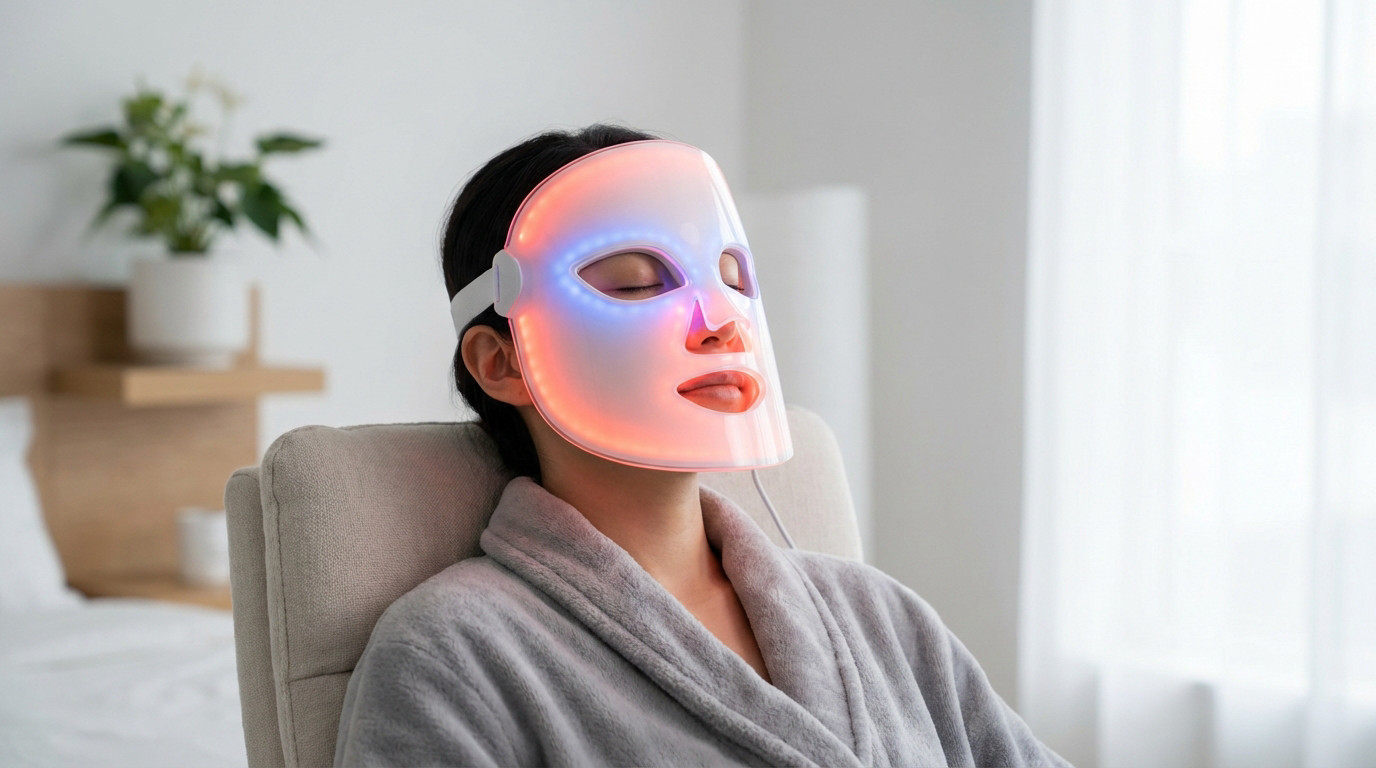
So what are these futuristic-looking led masks anyway?
More than just a pretty light show
You have likely seen them scrolling your feed. Those glowing robotic faces aren’t just for show. They represent a massive shift in at-home skincare. We aren’t dealing with gimmicky gadgets here; this tech stems from legitimate phototherapy research adapted for your nightstand.
These masks utilize Light Emitting Diodes to send precise, calculated wavelengths—usually red or blue—penetrating deep layers of your tissue.
The objective is simple: trigger specific reactions at the cellular level to drastically upgrade your complexion and appearance.
How light therapy got its start (spoiler: it wasn’t for skincare)
This tech didn’t start in a spa. NASA stumbled upon it in the 90s while experimenting with plant growth in space. They realized that red light didn’t just help plants; it actually accelerated wound healing in astronauts by energizing their cells.
Naturally, experts adapted this discovery. If light can repair an astronaut’s injury, it can certainly handle your fine lines. Today, we leverage that science to target acne bacteria and boost overall skin health without a doctor’s visit.
Why it’s a non-invasive treatment
Most effective beauty treatments require a bit of suffering, but not this one. It is completely painless. You aren’t burning off layers or piercing the barrier. It is a gentle method that delivers real led mask benefits without the scary recovery time or redness.
- No UV rays involved, so there’s no risk of sun damage or premature aging.
- It’s a non-thermal process, meaning it doesn’t burn the skin like lasers do.
- It works by stimulating your skin’s natural renewal process from within, not attacking it.
How LED Light Actually Talks to Your Skin Cells
The Concept of Photobiomodulation, Simplified
Let’s cut through the noise. The technical term here is photobiomodulation (PBM). It is simply the scientific name for how light impacts living biology. Think of it exactly like photosynthesis for plants, but adapted for your skin.
Light is actually a potent form of energy. Your skin cells contain specific photoreceptors that are waiting to catch it. These receptors absorb the light energy directly upon contact.
Once absorbed, that energy converts into fuel. This process effectively “wakes up” the cells to get to work.
It’s All About Specific Wavelengths
Every color you see corresponds to a specific wavelength, measured in nanometers (nm). This number is the gatekeeper. It determines exactly how deep the light can travel into your skin layers to do its job.
Here is the simple rule to remember. Longer wavelengths, like red, penetrate deep down. Shorter ones, like blue, act right on the surface. That is why different colors treat such different skin conditions effectively.
What Happens Inside the Skin
This targets the mitochondria, known as the power plants of your cells. The light triggers a massive surge in ATP production. That is the raw chemical energy your body needs to function properly and thrive.
This extra fuel allows cells to run efficiently. They can repair damage, build collagen, or fight bacteria. This spike in cellular activity is the real secret behind tangible led mask benefits you see in the mirror.
Red vs. Blue Light: The Two Colors With Real Science Behind Them
Red Light Therapy: The Anti-Aging Powerhouse
Red light acts as the heavyweight champion of anti-aging. It penetrates deep into the dermis to stimulate fibroblasts, unlocking key led mask benefits. These cells produce collagen and elastin. We are talking about specific wavelengths around 633nm.
You get real, visible perks like a reduction in wrinkles and fine lines. Skin firmness improves significantly over time. Overall texture just feels smoother and more resilient.
It also packs a serious anti-inflammatory punch. This action calms redness while boosting circulation, leaving you with a noticeably brighter complexion.
Blue Light Therapy: The Acne-Fighting Specialist
Blue light is your go-to weapon for acne-prone skin. It stays on the surface to hunt down acne-causing bacteria known as P. acnes. It destroys them right where they live. This stops nasty infections cold.
It helps regulate oil production to stop the grease factory. This effectively prevents new pimples from forming later. Your pores finally get a break from the congestion.
Think of it as a chemical-free way to manage mild to moderate acne. It works without harsh scrubbing.
A Head-to-Head Comparison for Clarity
To make this crystal clear, let’s look at a direct comparison. Here is exactly what each spectrum does best
| Feature | Red Light | Blue Light |
|---|---|---|
| Primary Target | Fibroblast cells for anti-aging | P. acnes bacteria for acne |
| Key Benefits | Boosts collagen, reduces wrinkles, calms inflammation | Kills bacteria, reduces sebum, clears breakouts |
| Penetration Depth | Deeper, into the dermis | Superficial, on the skin’s surface |
The Other Colors of the Rainbow: Worth the Hype?
Yellow and Green Light: What Are the Claims?
Manufacturers love adding a full spectrum to help their products stand out on the shelf. You will frequently see yellow and green settings on these devices. They promise to tackle specific issues that standard modes miss.
But before you get your wallet out, let’s look at the promised led mask benefits often associated with these extra wavelengths:
- Yellow Light: Often claimed to reduce redness, boost circulation, and improve lymphatic flow.
- Green Light: Typically marketed to target hyperpigmentation, sun spots, and uneven skin tone.
- Other colors (Amber/Purple): Sometimes mentioned for skin soothing or combining benefits of red and blue light.
The Expert Take: Where’s the Proof?
Here is the uncomfortable truth. Unlike the robust data backing red and blue wavelengths, the scientific evidence for these alternative colors is much more limited. Most board-certified dermatologists remain highly skeptical about their real-world impact.
The research is currently either nonexistent or simply not robust enough to confirm the bold marketing claims. Studies are often too small or lack independence.
The medical consensus is that their effectiveness for targeted skin problems remains, at best, anecdotal.
My Advice on Multi-Color Masks
Here is my direct advice for your investment. If you buy a device, focus entirely on the quality and power of the red and blue lights. These are the wavelengths that actually do the work.
View those other colors as a fun bonus, not a main selling point. Never pay a premium just for a “green light” feature with doubtful efficacy. Smart investment goes to proven technology.
Making LED Masks Work for You: A Reality Check
At-Home Devices vs. Professional Treatments
Let’s be brutally honest: a home mask isn’t a clinical machine. Professional devices boast a much higher density of LEDs and raw power output that consumer tech can’t legally replicate. You aren’t getting that same 100 mW/cm² intensity here.
Consequently, in-office sessions yield faster, more shocking transformations for your complexion. Yet, the cost is exorbitant, and the downtime is a genuine hassle for most busy people.
The real secret weapon of home devices is simply consistency. Regular, lower-dose treatments build cumulative results that eventually rival the clinic.
The Key to Seeing Results at Home
Patience and strict regularity are your absolute best friends in this process. Do not expect an overnight miracle cure. true led mask benefits appear progressively, not instantly.
- Use it consistently: You must follow the manufacturer’s recommendation, typically doing 3-5 sessions a week for about 10 minutes.
- Start with clean skin: Always use the mask on a freshly cleansed, completely dry face. Avoid makeup or heavy creams that block light.
- Be patient: It often takes a solid 4 to 8 weeks of regular use to see visible improvements in skin texture or acne.
The Bottom Line for Your Skin
In summary, a high-quality LED mask is an excellent addition to your skincare routine. To explore a top-tier option, discover the Led mask or browse the full range of Nooance Beauty tech. Consistent use is the secret to unlocking visible, long-term results.
FAQ
What exactly does an LED mask do for the skin?
LED masks utilise specific wavelengths of light to penetrate the skin at various depths, a process scientifically known as photobiomodulation. Instead of working on the surface like a scrub, the light energy stimulates cellular activity, encouraging your skin to produce more collagen or fight bacteria from within.
Are at-home LED light therapy masks safe to use?
Yes, these devices are generally considered very safe because they use non-thermal light and do not emit harmful UV rays. Unlike tanning beds or harsh lasers, they do not burn the skin or damage the skin barrier, making them a gentle, non-invasive option.
What is the difference between red and blue light settings?
The difference lies in the wavelength and the specific skin concern it targets. Red light penetrates deeply to stimulate collagen and elastin, making it the go-to for anti-ageing and inflammation. Conversely, blue light operates closer to the surface to destroy acne-causing bacteria and regulate oil production.
Do I really need a mask that offers yellow or green light?
While marketing often highlights a full spectrum of colours, the scientific evidence for yellow and green light is much more limited than for red and blue. For reliable results, experts recommend prioritising devices that focus on high-quality red and blue wavelengths, which have robust clinical data supporting their efficacy.
Can a home LED mask replace professional dermatologist treatments?
Home devices are not as powerful as the machines found in a dermatologist’s office, so they cannot replicate the immediate intensity of a professional session. However, the advantage of at-home masks is consistency; regular use over time allows for cumulative benefits that can significantly improve skin health and maintain professional results.
